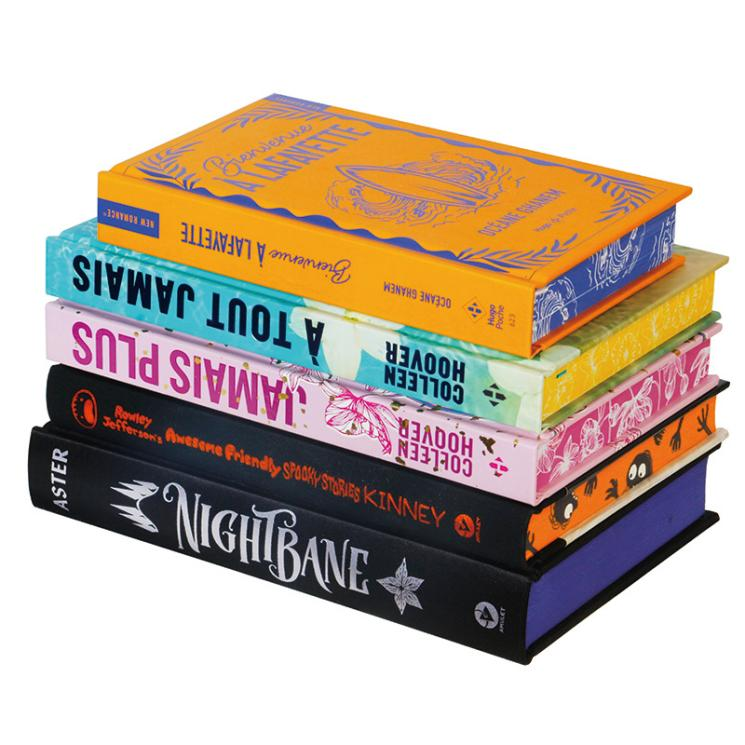
SHENZHEN, GUANGDONG, CHINA, October 16, 2026 /EINPresswire.com/ — The enduring appeal of a finely crafted hardcover book extends far beyond its visual presentation. When a reader runs a hand over a textured cloth spine, they experience precise engineering. Modern publishing demands a balance of specialized material science and advanced manufacturing. Publishers worldwide seek structural reliability alongside visual excellence. CAIMEI has built infrastructure designed specifically to meet these rigorous mechanical standards. As a premium hardcover book printing company in China, the firm combines decades of binding specialization with automated equipment, transforming raw paper and cloth into structurally sound volumes.
Mechanical Bindings and Structural Dynamics
The lifespan of a heavy volume depends primarily on its binding method. Standard commercial printing often relies on swift, surface-level adhesives. High-end book production requires a deeper mechanical approach.
Choosing between Smyth sewing and PUR adhesive depends entirely on the paper’s fiber orientation and the desired opening angle of the finished product. A “flat-lay” experience proves essential for art books and cookbooks. Durability under heavy usage takes priority for textbooks. Shenzhen Cai Mei Plus Printing Co., Ltd. (CAIMEI) operates as a premium hardcover book printing company in China, offering both Smyth sewing and Polyurethane Reactive (PUR) binding to meet these diverging needs.
Smyth sewing involves stitching grouped pages (signatures) together with high-tensile thread before gluing the spine. This method allows the book to stay open at any page without the spine cracking. This performance makes section sewing ideal for coffee table books, art anthologies, and reference sets.
In contrast, PUR adhesive provides a 50% stronger bond than traditional EVA glue. It also suits coated papers that resist standard adhesives. PUR cures through cross-linking with atmospheric moisture, forming a strong yet flexible bond. This keeps the adhesive stable under extreme temperatures. The glue never becomes brittle in freezing weather or softens in high humidity.
Beyond the adhesive, the book block architecture determines how well the volume retains its shape over years of use. Hardcover books generally follow either a round-back or square-back profile. A round back design requires precise mechanical “rounding and backing” to ensure the spine maintains its arc over time. This shape distributes the natural swelling caused by sewing threads evenly, preventing wedge-like distortion. Square-back bindings offer clean, geometric lines best suited for thinner, minimalist editions.
Material Compatibility and Substrate Performance
Structural stability requires a detailed understanding of how materials interact under physical stress. Cover materials act as the primary defense for internal pages. Woven book cloths, synthetic leathers, and heavy-duty coated papers each possess specific physical properties that affect production and longevity. Natural book cloth provides high tear resistance and breathing capacity, though it demands careful adhesive application to prevent strike-through. Synthetic materials offer exceptional water resistance and batch consistency, making them ideal for corporate editions or educational textbooks.
The choice of cover material directly impacts the stability of the underlying greyboard. Heavy binder’s board must resist warping, a common defect caused by uneven moisture absorption during gluing. CAIMEI focuses on “anti-warping” engineering for greyboards. The moisture content of the boards stays balanced against the ambient humidity of the destination market, preventing the covers from bowing. Calibrated material testing pairs appropriate board weights with compatible exterior laminates, neutralizing warping before books enter the casing-in phase.
Inside the volume, paper selection balances weight, finish, and chemical longevity. High-grammage coated art papers deliver excellent color reproduction. Their dense, smooth surfaces require specialized adhesives and precise folding pressures to prevent splitting along the spine crease. For archival publications, acid-free papers offer long-term yellowing resistance. The grain direction of interior sheets must align parallel to the book spine. Proper grain alignment ensures pages drape naturally when turned, enhancing tactile experience while reducing tension against binding threads.
Precision Engineering and Quality Verification
The transition from raw materials to a finished hardcover requires careful control over several mechanical steps. For round-back volumes, rounding and backing machines shape the spine area. This process creates a defined shoulder that supports the heavy cover board, shifting the book block weight away from the stitching lines alone. Workers then apply woven headband and tailband strips to reinforce the spine edges. These strips prevent dust infiltration and protect the binding when a book leaves a shelf. By utilizing 157gsm art paper for the wrap and 2.5mm or 3.0mm high-density greyboard, CAIMEI creates a structure that protects the interior signatures while providing a luxury feel.
Surface decoration demands similar precision. Blind debossing and metallic foil stamping require exact control over temperature, dwell time, and compression force. A stamping die that runs too hot causes fine details to bleed. Insufficient pressure leaves foil unable to adhere permanently to textured cloths. CAIMEI maintains strict mechanical calibration across its stamping lines to ensure crisp, clean lines.
To verify these standards, physical testing protocols quantify durability. Automated page-pull tests measure the force required to detach a single leaf, confirming adhesive penetration and thread strength. Flex-testing rigs simulate years of repeated openings. Environmental simulation chambers expose sample volumes to extreme shifts in temperature and humidity, ensuring books shipped across global channels arrive structurally sound.
Technical Specification Selection Guide
Selecting the right combination of binding, structure, and materials depends heavily on the book’s intended use. The following configurations outline standard technical paths:
Fine Art Anthologies and Photography Portfolios: Recommended specification uses a round-back profile paired with Smyth sewing and a premium cloth wrap over high-density board. The interior pages use high-grammage coated art paper with a protective matte aqueous coating. This combination ensures flat-opening capability for wide images while preventing page sticking.
Reference Manuals and Technical Textbooks:Recommended specification pairs a square-back profile with PUR adhesive binding and a reinforced synthetic leather or laminated paper cover. The interior uses lightweight, high-opacity acid-free paper. This setup provides maximum resistance to rough handling and frequent shelf storage.
Engineering Value in Modern Publishing
Modern book production balances artistic design and structural engineering. Visual presentation initiates the consumer’s connection. The mechanical design of the binding, board, and paper determines long-term value. Shenzhen Cai Mei Plus Printing Co., Ltd. addresses this balance by focusing on structural reliability throughout manufacturing. Imported commercial presses operate alongside automated binding lines, delivering consistent quality across large editions. This systematic approach ensures every volume functions reliably as an engineered object, preserving both the author’s work and the publisher’s investment for years to come.
Elevate your publication with expert hardcover engineering. Reach out to CAIMEI for a consultation on binding techniques and cover finishes, and explore full production specifications at: https://caimeiprinter.com/
Frequently Asked Questions
Q: When should Smyth sewing be chosen over PUR for a hardcover project?
A: Smyth sewing suits books that need to lay completely flat, such as coffee table books. PUR works better for thick volumes with heavy-coated paper where maximum leaf-pull strength matters most.
Q: How does CAIMEI prevent hot stamping from peeling off the cover?
A: The stamping temperature stays calibrated to the specific foil type and cover material. For cloth-bound books, increased pressure and dwell time help the foil bond deeply with the fabric fibers.
CAIMEI
CAIMEI
Legal Disclaimer:
EIN Presswire provides this news content “as is” without warranty of any kind. We do not accept any responsibility or liability
for the accuracy, content, images, videos, licenses, completeness, legality, or reliability of the information contained in this
article. If you have any complaints or copyright issues related to this article, kindly contact the author above.

Media gallery