
Shenzhen, Guangdong, China – October 21, 2026 – What Small Watch Sellers Should Stock First: A new online seller looking at a watch catalog for the first time often tries to solve the wrong problem. The instinct is to cover as many styles as possible so there’s something for every customer, but a first order spread across ten designs at low quantity usually ends up as ten designs nobody reorders. Small wrist watch manufacturers and their buyers who actually turn a first order into a repeat one tend to do the opposite: they pick a narrow range on purpose, accept that they don’t know their bestseller yet, and structure the order so that finding out is cheap rather than expensive.
How Much to Order When You Don’t Know Your Bestseller Yet
Some catalog models carry an MOQ as low as 50 pieces per colorway, and that number matters more than it looks. Ordering 50 units each of four colorways across one case design costs roughly the same as ordering 200 units of a single colorway, but the first version tells you which color actually sells before you commit to a bigger run. Watch factories generally allow mixed colorways within a single case mold at no extra tooling cost, since the mold itself doesn’t change — only the dial and hands do. The mistake to avoid is spreading that same 200-unit budget across four different case shapes instead of one shape in four colors, since that adds real tooling variation and slows everyone’s delivery down.
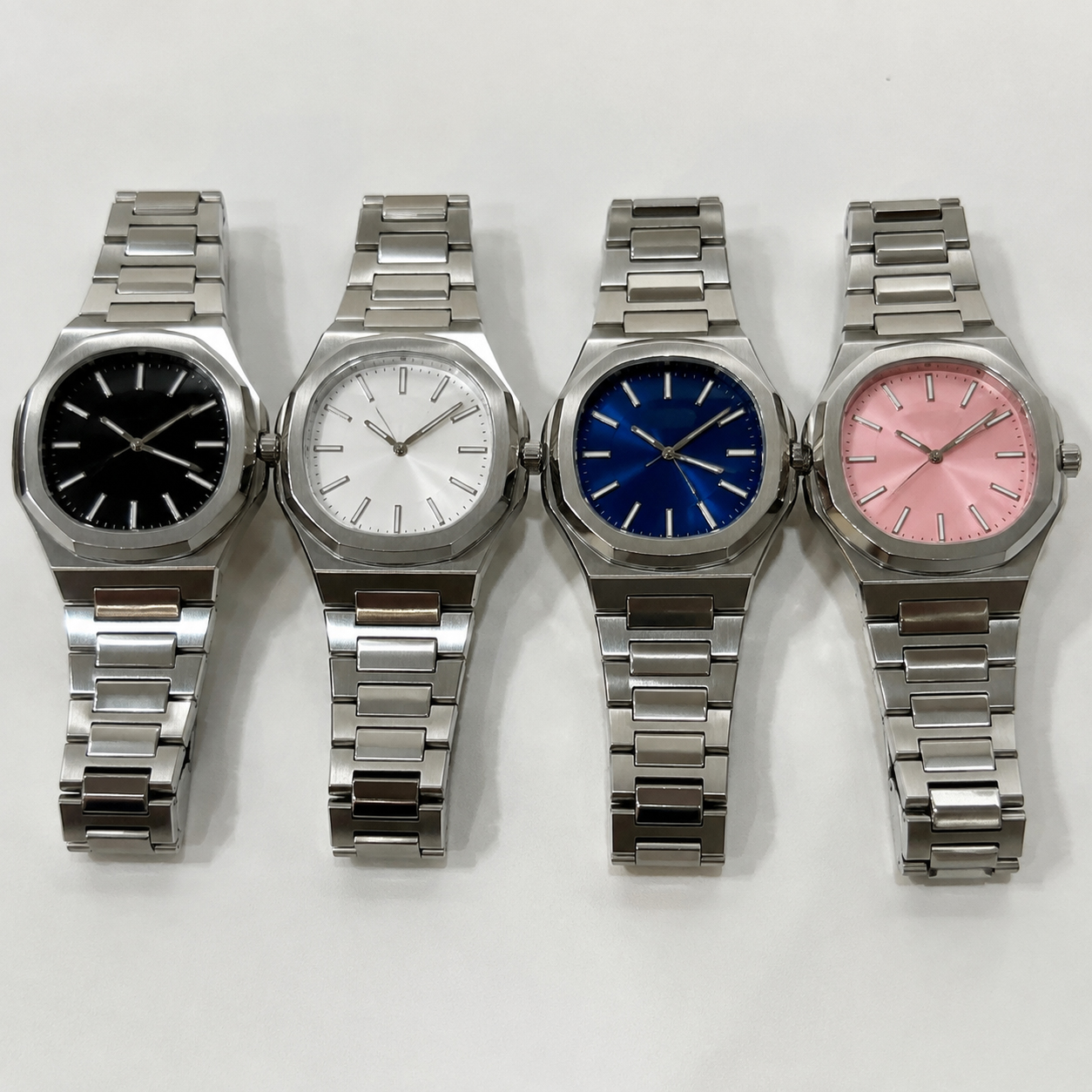
Movement and Case Material: The Two Decisions That Actually Matter Early
For a first order, quartz almost always makes more sense than automatic, and not only on price. A basic quartz caliber costs $2 to $4 per unit versus $8 or more for an entry automatic, but the bigger factor is service risk — a new seller with no repair process yet is better off with a movement that essentially never generates a warranty claim. Even small swiss watch manufacturers who do offer automatic options will generally steer a first-time buyer toward quartz for exactly this reason. On the case side, 316L stainless steel costs more per unit than zinc alloy, but a small seller’s early reviews carry disproportionate weight, and a case that tarnishes within a few months of light wear creates exactly the kind of review a new storefront can’t afford. Between the two decisions, case material is the one worth spending the extra dollar or two on; movement type is the one where quartz’s practicality outweighs any perceived downgrade.
Private Label First, Full Customization Later
White label watch manufacturers typically offer three tiers of customization, and small sellers often jump to the wrong one. Fully custom tooling — a case shape nobody else has — usually needs 300 to 500 pieces to justify the mold cost, and is really a job for watch designers and manufacturers working together on a shape that doesn’t exist yet, not a first-order decision. Private label — your logo and dial design on an existing case — needs only the base MOQ, often 50 to 100 pieces. Private label watch manufacturers and private label watch suppliers that serve first-time brands almost always recommend starting there and saving custom tooling for a second or third order, once actual sales data shows which case shape is worth building a mold around. Skipping straight to full customization on a first order means betting real tooling money on a guess instead of a result.
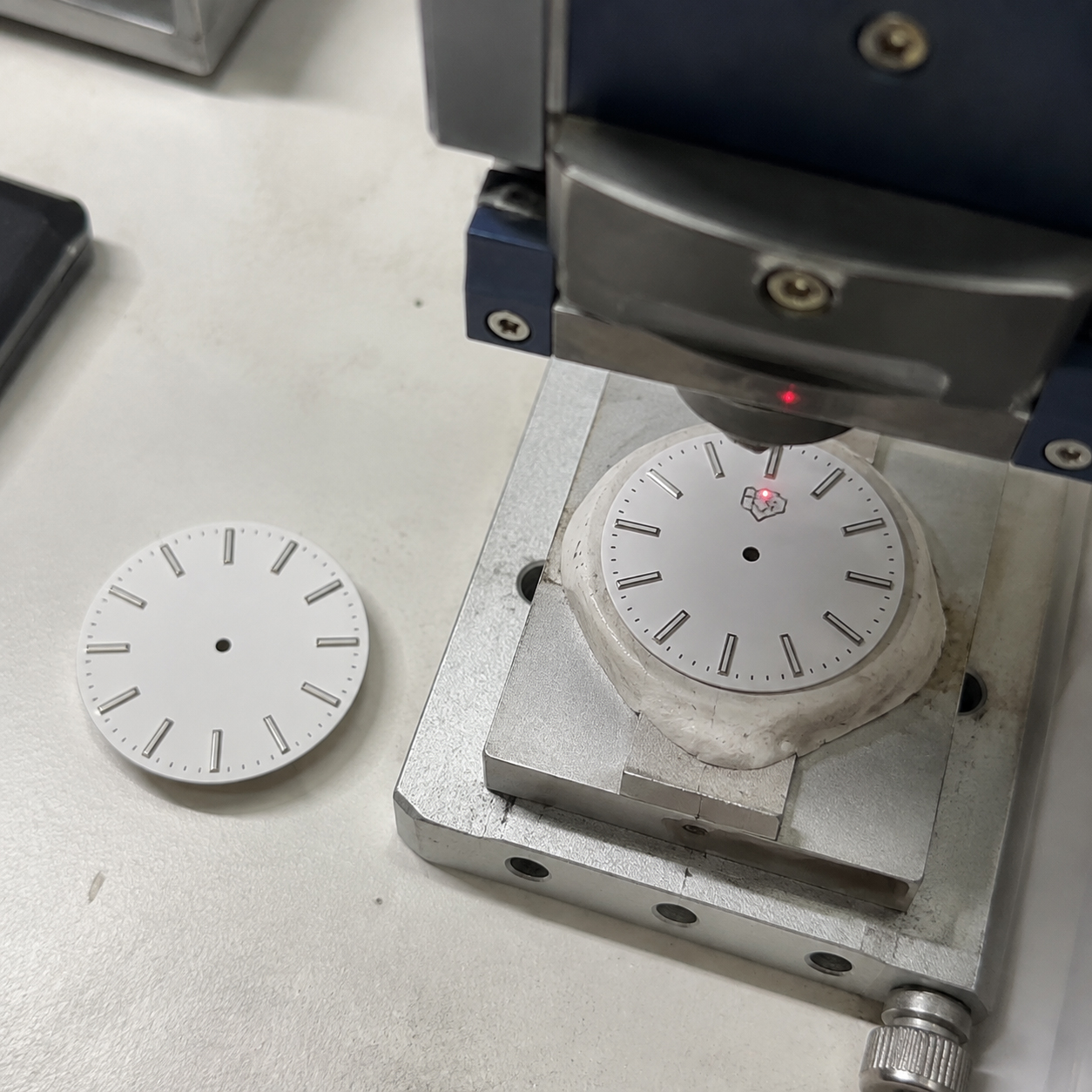
The Sample Step Most New Sellers Skip
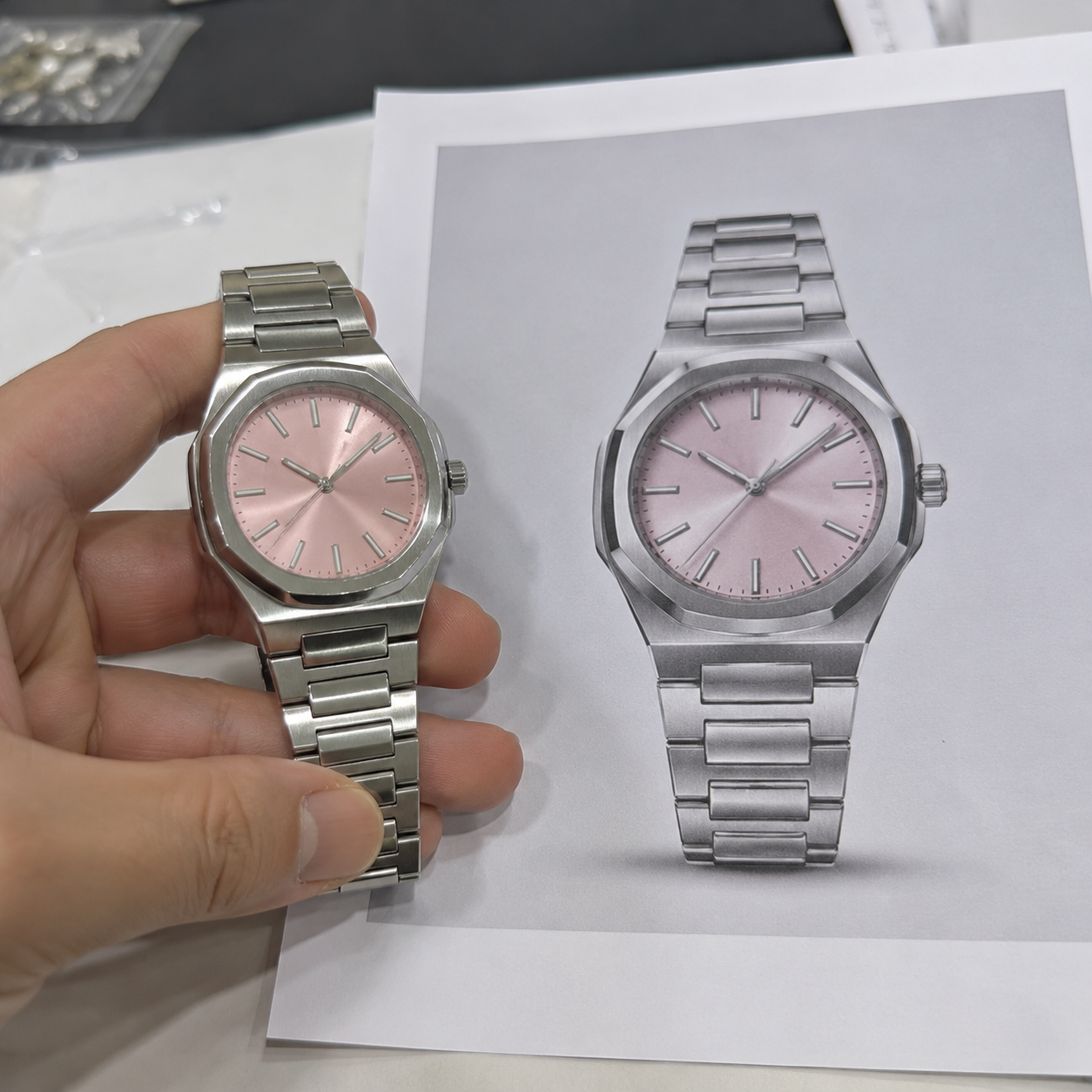
A surprising number of first-time buyers go straight from photos to a bulk order, and the ones who skip the sample stage are also the ones most likely to reorder something entirely different a month later. Any watch prototype manufacturer will tell you the same thing: a single sample typically costs the unit price plus a $30 to $50 handling fee and takes 5 to 10 days for an existing catalog design. That week is cheap compared to discovering, after 100 units have already shipped, that the dial color looks different in hand than it did in the product photo — a mismatch that happens more often than buyers expect, since screen color rendering and physical dial finishing don’t always agree.
Common First-Order Mistakes
Beyond spreading the budget too thin, the next most common mistake is choosing packaging last. A retail box, printed insert card, and warranty card add a fixed cost per unit whether the order is 50 pieces or 500, so a small first order absorbs that fixed cost less efficiently — worth knowing up front rather than discovering it once the quote comes back higher than expected. The other frequent misstep is not asking about reorder lead time before the first order ships. A dropship watch suppliers arrangement and a small-batch wholesale arrangement have different reorder timelines, and a seller who assumes a 15-day reorder window when the real number is closer to 30 can end up out of stock during exactly the week their first batch starts selling well.
How KODA Handles This
We keep MOQs low enough at the private label tier that a first-time seller can test three or four colorways without overcommitting, and we quote reorder lead time at the same time as the first order, not after. Not every one of the small watch manufacturers a new seller contacts will structure a first order this way, since splitting a small budget across colorways is more work for the factory than one large single-design run. If you don’t yet know which design will sell, tell us your target price point and rough budget and we’ll suggest a small split order across colorways rather than one large bet on a single design.
FAQ
Is 50 units really enough to start with?
For testing a colorway or two within an existing case, yes. It’s not enough volume to justify a new case mold, but that’s not what a first order is for.
Should a first-time seller start with private label or full customization?
Private label almost always. Full customization is worth revisiting once a specific design has proven itself in a private label run.
Is quartz a downgrade for a new brand’s image?
Not in practice. The case finish and packaging do more for brand perception than movement type, and quartz removes most of the early warranty risk.
How long does a first sample actually take?
Around 5 to 10 days for an existing case design with a new dial or logo. A fully new case shape takes longer, which is one more reason to save that step for a later order.
About Us
Professional producing &Customizing always offer bespoke service,Withmore than 17yearsof experience in Brand design R&D and engineering wecan provide efficient solutions to demanding requirements.
Media Contact
Company Name: Shenzhen Koda Horologe Co., Ltd.
Contact Person: Media Relations
Email: Send Email
Country: China
Website: https://www.kodawatch.com/
Press Release Distributed by ABNewswire.com
To view the original version on ABNewswire visit: Strategic Inventory Selection Guides New Watch Sellers Toward Profitable Market Entry


