
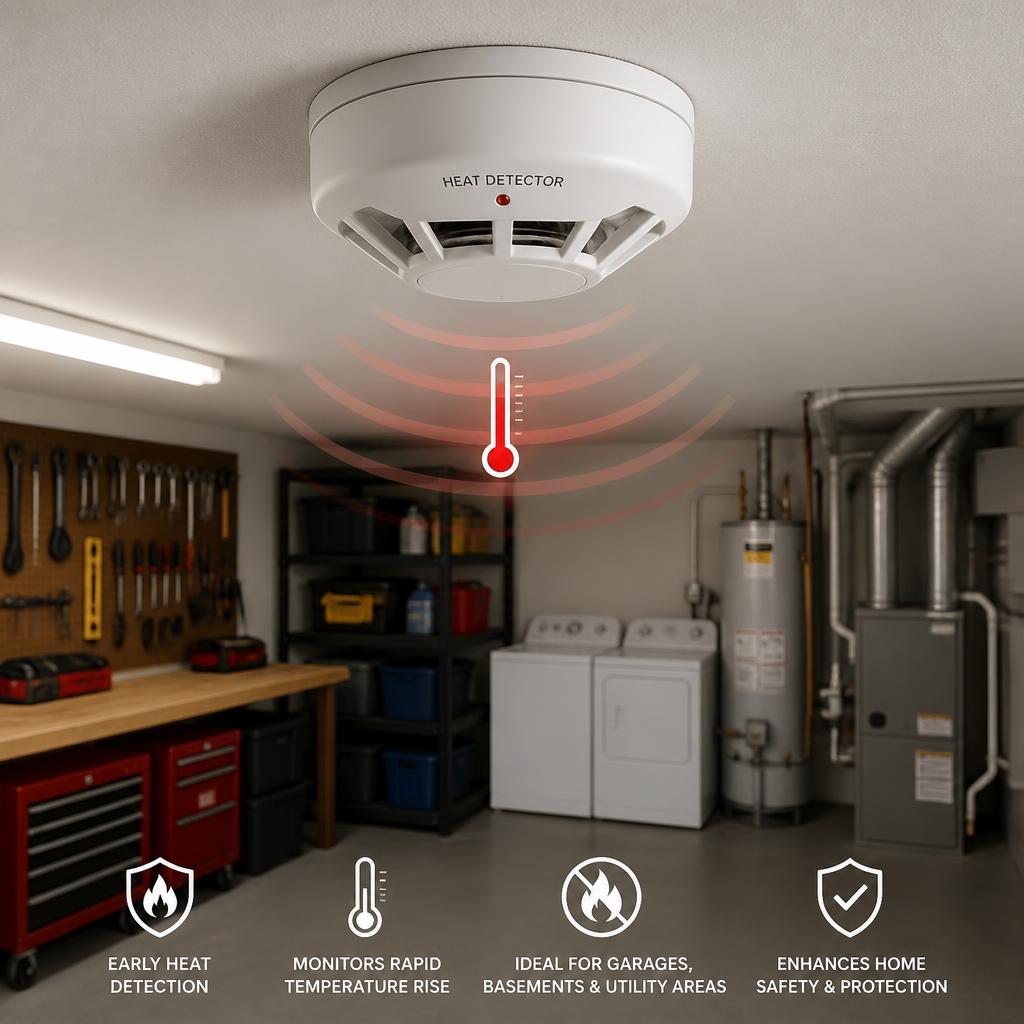
CHARLOTTE, NC – X-Sense highlights the growing need for whole-home protection as fire behavior in modern households becomes increasingly unpredictable.
Most people understand the purpose of a smoke alarm. It detects smoke and warns occupants that a fire may be developing. Heat detectors work differently. They respond when the temperature in an area rises to a dangerous level.
That difference matters. Heat detectors are not designed to replace smoke alarms throughout a home. Instead, they can add another layer of protection in locations where smoke alarms may be less suitable or more likely to cause unwanted alerts.
Kitchens, garages, basements, workshops, and utility spaces can all present challenges for traditional smoke alarms. Cooking fumes, steam, dust, vehicle exhaust, and occasional temperature changes may trigger nuisance alarms or make placement more complicated. A heat detector can offer a practical alternative in the right setting.
Heat Detectors Respond to Temperature Changes
A heat detector does not look for smoke particles in the air. It monitors temperature and activates when heat reaches a specified threshold or rises rapidly.
This makes it useful in areas where smoke may be present during normal daily activities. For example, steam from cooking or a smoky pan may cause a smoke alarm to activate near a kitchen. In a garage, dust or fumes from tools and vehicles may create similar issues.
A heat detector focuses on excessive heat instead. It is intended to identify conditions that may suggest a fire is developing, particularly in spaces where a smoke alarm may not be the most appropriate device.
However, this also means a heat detector may respond later than a smoke alarm during some fire situations. Smoke can travel before the temperature in a room reaches the detector’s activation point. That is why smoke alarms should still be installed in bedrooms, outside sleeping areas, and on every level of the home in accordance with local guidance.
Where Heat Detectors May Be Useful
Heat detectors are often considered for garages because vehicles, fuels, batteries, tools, and stored materials can increase fire risk. A smoke alarm may not be appropriate in every garage environment, while a heat detector can help monitor rising temperatures.
Basements may also benefit from a heat detector, especially when they contain appliances, storage items, electrical equipment, or workshop areas. Utility rooms and laundry areas are other locations where homeowners may want additional protection.
Kitchens can be more complicated. Cooking is a common cause of unwanted smoke-alarm activations when alarms are placed too close to appliances. A heat detector can be considered as part of a wider safety plan, but it should not be treated as the only fire detection device near sleeping areas or elsewhere in the home.
Every property is different. Homeowners should check local building codes, fire safety guidance, and manufacturer instructions before deciding where to install any alarm.
Heat Detectors Work Best as Part of a Wider System
A heat detector is most effective when it is part of a broader home safety setup. Smoke alarms remain essential because they can provide early warning when smoke is present. Carbon monoxide alarms may also be needed where fuel-burning appliances are used.
The goal is not to choose one device for every room. The goal is to match the right type of alarm to the risk in that area.
For example, bedrooms and hallways need smoke alarm coverage because people may be asleep when a fire begins. A garage may need a heat detector because of the conditions found there. A home with a boiler, fireplace, gas appliance, or attached garage may also need carbon monoxide protection.
When these devices are planned together, homeowners can create a more complete safety network. This approach is especially useful in larger homes, properties with several floors, or households where family members sleep in different parts of the building.
Connected Alarms Can Improve Whole-Home Awareness
Interconnected alarms are becoming more common because they help make sure a warning is heard across the property. When one compatible device detects danger, other connected alarms can activate too.
This can be valuable in a large home where a garage, basement, or utility room is far from bedrooms. A heat detector may identify a serious temperature rise in one area, while connected alarms alert people in other rooms.
X-SENSE offers a range of connected home safety products designed to support wider home coverage. These systems can combine smoke alarms, carbon monoxide alarms, and heat alarms within one network when compatible devices are used.
For homeowners, the main benefit is simple. A warning in one part of the house does not stay limited to that room. It can be heard elsewhere, giving occupants more time to respond.
A Closer Look at the XH02-M Heat Detector
The X-SENSE XH02-M heat detector is designed for areas such as kitchens, garages, and basements. It uses an NTC thermistor sensor and is rated to respond within a heat sensitivity range of 129°F to 149°F, or 54°C to 65°C.
The device can connect to the X-SENSE SBS50 Base Station, allowing it to form part of an interconnected smart safety system. When connected, it can work alongside compatible smoke alarms, carbon monoxide alarms, and other supported devices.
According to product information, up to 50 devices can be added to the base station. The XH02-M also has a stated wireless transmission range of more than 1,700 feet in open air, although actual range can vary depending on walls, building materials, and the home layout.
The alarm includes a sealed lithium battery. Its stated battery life differs depending on whether it is connected to the base station. This can reduce regular battery replacement, but users should still test the device and follow the recommended maintenance schedule.
Installation and Maintenance Still Matter
A heat detector should be installed carefully and in line with the manufacturer’s instructions. It should not be placed where everyday heat exposure may regularly affect performance. Homeowners should also avoid painting over devices, blocking sensor openings, or installing alarms near obstructions that could interfere with detection.
Like any safety device, a heat detector should be tested regularly. Dust, damage, battery issues, and old equipment can all affect reliability. The installation date should be recorded so the device can be replaced when it reaches the end of its stated lifespan.
Families should also have a clear escape plan. Everyone in the home should know what an alarm sounds like, where to exit, and where to meet outside. Technology can provide a warning, but preparation helps people act quickly once that warning is heard.
A Practical Addition to Home Fire Safety
Heat detectors have a specific role in a home safety plan. They are not a replacement for smoke alarms, but they can offer added protection in places where heat detection makes more sense.
By choosing suitable devices for each area, maintaining them properly, and connecting compatible alarms where appropriate, homeowners can build a stronger and more reliable approach to fire safety.
About X-SENSE Innovations
Founded in 2013, X-SENSE Innovations operates from its registered U.S. address at X-SENSE USA LLC, 1209 Orange St, Wilmington, DE 19801, and specializes in developing certified home fire and safety solutions for both residential and commercial environments. The company focuses on producing professional and user-friendly safety devices, including domestic fire alarms such as smoke, carbon monoxide, and heat alarms, as well as smart home safety systems covering fire protection, intrusion detection, and indoor environment monitoring.
More information is available at www.x-sense.com.
Official company social media profiles: Facebook and Instagram.
Media Detail
Contact Person Name: Farrukh
Company Name: X-Sense
Email: service@x-sense.com
Website: https://www.x-sense.com/
Phone: +1 (833) 952-1880


